The Rebbe's Room
The Rebbe's Room (also called Gan Eden HaElyon, "the upper Gan Eden"), described in Chassidic tradition as the Holy of Holies of the time of exile,[1], is the private office of the Rebbe, located on the left side as one enters 770, opposite the room of the Mazkirus. There he studied Torah, received people for yechidus and answered letters from all over the world. From 5749 (1989), the Rebbe's bed and residence were also permanently moved to the room, until after Gimmel Tammuz.


From 5700 (1940) the room served as the yechidus room of the Rebbe Rayatz; after the Rebbe's arrival in the United States it was briefly his apartment and then the offices of Merkos L'Inyonei Chinuch, and from 5707 (1947) it became the Rebbe's private office. It contains the desk used by the Rebbe Rayatz and afterwards by the Rebbe, and a round table built by the Rebbe Maharash. Various distributions took place at its doorway. One enters the room only for yechidus, after spiritual preparation.
History edit
From the purchase of the 770 building (in 5700 (1940)) until the Rebbe's arrival in the United States (on 28 Sivan 5701 (1941)), the room served as the yechidus room of the Rebbe Rayatz, where he also said maamarim of Chassidus every Monday night. With the Rebbe's arrival in the United States, the room was converted into a temporary apartment for him and for Rebbetzin Chaya Mushka, until they rented an apartment on New York Avenue, before they moved to the building at 1304 President Street.
When the Rebbe and the Rebbetzin moved to the new apartment, this room became the offices of the Merkos L'Inyonei Chinuch organization (which the Rebbe headed at the time), and the Rebbe instructed that the desk the Rebbe Rayatz had left there be turned to face a different direction[2]. The Rebbe also worked in this room with the other members of Merkos: he sat at the head of the table, with the secretary Rabbi Chaim Mordechai Aizik Hodakov on his left and the secretary Rabbi Nissan Mindel on his right. The books published by Merkos L'Inyonei Chinuch were also sold in this room. When the study class for young students moved from the room next to the Zal HaKatan in 5707 (1947), that room was transferred to Merkos[3], and this room became the Rebbe's private office; in 5709 (1949), at the Rebbe's instruction, all the Merkos equipment that still remained was moved out of the room[4].
Contents and Layout of the Room edit
Just as in the spiritual worlds the way to "Gan Eden HaElyon" passes through "Gan Eden HaTachton", so too the space through which one passes to enter the Rebbe's room (called "Gan Eden HaElyon") is called "Gan Eden HaTachton". It is entered by turning left from the entrance of 770. The corridor was built, in Italian style, by the doctor who owned the building (before its purchase for the Rebbe Rayatz and Agudas Chassidei Chabad in the United States), with a chandelier hanging in its center. The floor was made of wood (as in the Rebbe's room), and only some years after the purchase was it replaced with a stone floor. In this corridor the Torah was read for the Rebbe when yechidus ended in the morning hours, and Maariv was held there (on fast days) when the Rebbe davened earlier than usual. For years the door facing the building's entrance lobby was open, but following the events of Shemini Atzeres 5738 (1977) it was decided to lock it, and entry was allowed only to those going in to the Rebbe for yechidus, who would prepare and wait there. At first a mailbox stood in front of the entrance to the Rebbe's room, and the Rebbe would open it every morning and empty its contents. At the end of the 5710s (1950s) he began to place the mail in the entrance hall of his home, and the mailbox was removed.
Bookcases line all the walls of the room (except the wall behind the Rebbe and the wall facing Eastern Parkway, which has windows). The room contains the desk used by the Rebbe Rayatz during his stay there[2], and afterwards by the Rebbe. Also in the room is a round table that the Rebbe Maharash built with his own hands in his later years, on doctors' orders, to keep his hands working well. The Rebbe redeemed the table during his visit to Paris from Rebbetzin Chana Ozerman – a granddaughter of the Rebbe Maharash, the daughter of his son Reb Menachem Mendel. It consisted of parts, which were assembled in the Rebbe's room, and it has not left the room since[5]. In the past the Rebbe's bed also stood there. On both sides of the Rebbe's seat there were once two large windows facing the alley ("shlash"); when the alley was closed off and a building was built adjoining them, they were blocked up, and the Rebbe turned the two spaces into bookcases.
Various events took place at the doorway of the room, such as the receiving of pidyonos nefesh, the distribution of lekach on Erev Yom Kippur (see picture), and the distribution of matzos to the Chassidim on Erev Pesach. Four times the dollars distribution, usually held in the lobby of 770, took place at the doorway of the Rebbe's room: Erev Rosh Hashanah 5749 (1988), after the receiving of pidyonos nefesh; Hoshana Rabbah 5752 (1991), after the distribution of lekach; Sunday, 17 Kislev 5752 (1991), when the Rebbe distributed Kuntres Drushei Chasuna in a plastic pouch that also contained a dollar (see picture); and the distribution of Sunday, 1 Teves 5752 (1991), when a dollar and a coin were distributed in a plastic pouch printed with "Chanukah gelt". That distribution was stopped so that the Rebbe could go down to daven Mincha in the Zal HaGadol, and it continued there afterwards.
Attitude Toward the Room edit
For Chabad Chassidim this room is the pinnacle of holiness, and one enters it only after special preparation: immersion in a mikveh, saying chapters of Tehillim, and inner refinement of the soul. Chassidim would say that "the room in which the Rebbe sits is our Holy of Holies, and the Rebbe is our Ark – in which are the Tablets of the Torah of Hashem, blessed be He"[1]. The Rebbe Rayatz even described the yechidus room as the "Heichal of Moshiach"[6].
Chassidic literature records various stories that express the special attitude toward the rooms of the Rebbeim even after their passing. Prominent among them is a story that the Rebbe Rayatz told in the first maamar of Chassidus he said after the passing of his father, the Rebbe Rashab: in one of the years of his early childhood[7], some time after the passing of his grandfather, the Rebbe Maharash, the Rebbe Rayatz was in his room, deep in thought, when he suddenly heard the sound of weeping; he turned around and saw his father, the Rebbe Rashab, standing in front of the desk of his father, the Rebbe Maharash, reading a pidyon nefesh in tears, as if before his father, the Rebbe Maharash. From this the Rebbe Rayatz explained the greatness of a tzaddik's influence in the world and of the holiness drawn into the world through him, which acts eternally – to the extent that the holiness in his room is on the level of the ten sefirot of the world of Atzilut, and thereby his eternity is brought about in the physical world[8].
From these attitudes, the Chassidim of our generation learn kal vachomer: if these things are said about the Rebbeim who passed away, how much more so must we conduct ourselves with holiness toward the room of the Rebbe, who is alive and enduring[9].
Entering It edit
One enters the Rebbe's room only for yechidus, after preparing oneself spiritually for this event, which is likened to the entry of the Kohen Gadol on Yom Kippur into the Holy of Holies.
The secretaries (and in previous generations, the attendants) were permitted to enter more often to bring in notes asking for brachos and to arrange other matters. Nevertheless, it is told of the secretary Rabbi Hodakov that every time he entered (even though he entered many times a day) he would straighten his "gartel" anew, as if he were entering for the first time.
There were also Chassidim who were permitted to enter the inner sanctum at any time, such as Rabbi Reuven Dunin, Rabbi Sholom Hecht and Rabbi Yehuda Leib Bistritzky.
Today, some hold minyanim in the Rebbe's room for Shacharis on Mondays and Thursdays, Shabbosos and Yomim Tovim, and they have even installed a small Aron Kodesh there. Many Chabad Chassidim refrain from entering the room, as part of their belief in the eternity of the Rebbe's life[10]. Some refrain from entering it because it is the private room of the Rebbe and its holiness is always present, even after Gimmel Tammuz, and also because the Rebbe expressed his view against entering his room, after the year of the passing of the Rebbe Rayatz and after he assumed the leadership[10].
Gallery edit
-
 The Rebbe entered his room through Gan Eden HaTachton (photographed from the Zal HaKatan opposite it)
-
 The round table built by The Rebbe Maharash, which stands in the Rebbe's room
-
 Rabbi Menashe Klein at yechidus in the Rebbe's room
-
 Mr. Menachem Begin at yechidus in the Rebbe's room
-
 President Zalman Shazar during his yechidus in the Rebbe's room. On the table one can see an ornate box holding dozens of manuscripts of the Rebbe Rashab, which Shazar presented to the Rebbe during the visit.
-
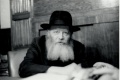 The Rebbe at yechidus with a member of the US Congress in his room
-
 Rabbi Pinchas Menachem Alter of Gur visiting the Rebbe
-
 Rabbi Avraham Yaakov Friedman (The Third) of Sadigura at yechidus in the Rebbe's room
-

-
 Lt. Col. Yisrael Yarkoni, military aide to President Zalman Shazar, after the yechidus in the Rebbe's room
-
 A policeman passes before the Rebbe at the distribution of lekach on Erev Yom Kippur, at the entrance to the Rebbe's room
-
 The Rebbe distributing Kuntres Drushei Chasuna together with a dollar, at the regular distribution at the entrance to his room, 17 Kislev 5752
-
 The window of The Rebbe's room (ground floor, left side)


See Also edit
External Links edit
- Lubavitch is our Jerusalem, HaTamim, booklet 2, p. 126, Hebrewbooks.org (Hebrew)
- Rabbi Sholom Yaakov Chazan, "There is no change in what is stored away": 770 – the eternal place of the Nasi of the generation, Chabad.info (Hebrew)
- A miniature replica of the Rebbe's room, Chabad.info (Hebrew)
- Photos taken in the Rebbe's room in 5751 (1991): Otzar HaChochma (Otzar.org); The Rebbe's menorah at the doorway of his room, Chabad.info (Hebrew)
- The exquisite details of the Rebbe's room, Anash.org (photos)
- Lubavitch Mikdasheinu, Shmulik Sofer hosts Shmuel Betesh, Chabad.info (Hebrew, audio)
References edit
- ↑ 1.0 1.1 HaTamim, booklet 2, p. 126, Hebrewbooks.org (Hebrew): "Until the Beis HaMikdash is built in Jerusalem, Lubavitch is our Jerusalem, and the shul in which the Rebbe davens is our Beis HaMikdash... the room in which the Rebbe sits is our Holy of Holies, and the Rebbe is the Ark in which are the Tablets of the Torah of Hashem, blessed be He." Cited in Kuntres Beis Rabbeinu Shebebavel, note 74. A similar expression is found in a reply sent by the Rogatchover Gaon about financial support that the Rebbe Rashab had sent him: "Now too the jar of manna rests in the Holy of Holies" (as is known, the jar of manna – the food on which the Jewish people lived in the desert – and the passage of the manna are a segulah for livelihood). Kfar Chabad weekly 1929, p. 30.
- ↑ 2.0 2.1 The desk originally stood facing the doorway of the room; when the room passed into the Rebbe's hands he instructed that it be moved to the east side – apparently so as not to sit in the place of the Rebbe Rayatz.
- ↑ And when the Rebbe assumed the leadership, it became the room of the Mazkirus.
- ↑ Pages 14–16, Chabad.info (Hebrew, PDF).
- ↑ See Mibeis HaGenazim, p. 277, Chabadlibrary.org (Hebrew, PDF).
- ↑ Sefer HaSichos 5696 (1936), at the beginning.
- ↑ 5645 (1885) or 5646 (1886).
- ↑ The maamar beginning "Reishis Goyim Amalek", Sefer HaMaamarim 5680–5681, p. 10 (Otzar.org), and cited at greater length in Sefer HaSichos 5704, p. 6, Hebrewbooks.org (Yiddish). The Rebbe explains and expands on this in Likkutei Sichos, vol. 32, p. 19 (the story itself on p. 24), Hebrewbooks.org.
- ↑ See the (Hebrew) article on the eternity of the Rebbe's life.
- ↑ 10.0 10.1 "There is no change in what is stored away": 770 – the eternal place of the Nasi of the generation, Chabad.info (Hebrew)