
Likkutei Amarim - Chapter 7: Difference between revisions
m Title Case headings |
Hidden {{סדרה}} → {{Succession}} |
||
| Line 39: | Line 39: | ||
*Rabbi [[Chaim Levi Yitzchak Ginsburg]], '''[https://abc770.org/article_node_2860/ Kelipas Nogah]''', an extensive commentary on Chapter 7 from the book [[Pninei HaTanya]] | *Rabbi [[Chaim Levi Yitzchak Ginsburg]], '''[https://abc770.org/article_node_2860/ Kelipas Nogah]''', an extensive commentary on Chapter 7 from the book [[Pninei HaTanya]] | ||
{{Succession|before=[[Likkutei Amarim - Chapter 6]]|list=Chapters of Likkutei Amarim|after=[[Likkutei Amarim - Chapter 8]]}} | |||
Previous: [[Likkutei Amarim - Chapter 6|Chapter 6]] | Chapters of Likkutei Amarim | Next: [[Likkutei Amarim - Chapter 8|Chapter 8]] | Previous: [[Likkutei Amarim - Chapter 6|Chapter 6]] | Chapters of Likkutei Amarim | Next: [[Likkutei Amarim - Chapter 8|Chapter 8]] | ||
Revision as of 22:25, 19 November 2026
| Tanya |
|---|
| Title Page and Introduction |
| Title Page · Haskamah 1 · Haskamah 2 · Haskamah 3 · Hakdamas HaMelaket |
| Likkutei Amarim |
| 1 · 2 · 3 · 4 · 5 · 6 · 7 · 8 · 9 · 10 · 11 · 12 · 13 · 14 · 15 · 16 · 17 · 18 · 19 · 20 · 21 · 22 · 23 · 24 · 25 · 26 · 27 · 28 · 29 · 30 · 31 · 32 · 33 · 34 · 35 · 36 · 37 · 38 · 39 · 40 · 41 · 42 · 43 · 44 · 45 · 46 · 47 · 48 · 49 · 50 · 51 · 52 · 53 |
| Shaar HaYichud VehaEmunah |
| Chinuch Katan · 1 · 2 · 3 · 4 · 5 · 6 · 7 · 8 · 9 · 10 · 11 · 12 |
| Igeres HaTeshuvah |
| 1 · 2 · 3 · 4 · 5 · 6 · 7 · 8 · 9 · 10 · 11 · 12 |
| Igeres HaKodesh |
| 1 · 2 · 3 · 4 · 5 · 6 · 7 · 8 · 9 · 10 · 11 · 12 · 13 · 14 · 15 · 16 · 17 · 18 · 19 · 20 · 21 · 22 · 23 · 24 · 25 · 26 · 27 · 28 · 29 · 30 · 31 · 32 |
| Kuntres Acharon |
| 1 · 2 · 3 · 4 · 5 · 6 · 7 · 8 · 9 |
Chapter 7 - The Garments of the Animal Soul
Introduction
This is the second of three chapters explaining the details of the animal soul. In the previous chapter its essence was explained, and now the essence of its garments is explained.
Text
Summary
The animal soul does not oppose holiness; its whole concern is only to give life to the body alone. As long as holiness does not "disturb" the body, it does not oppose it. Therefore it can also clothe itself in holy garments, and through them itself ascend to holiness.
However, every thought, speech and action that are not holiness (even if they are entirely permitted) bring a person down to the three impure kelipos, and within this itself there are two modes:
A. For thought, speech and action that are permitted - teshuvah is effective (so that they can return and ascend to holiness).
B. For thought, speech and action that are forbidden - teshuvah is not effective (to elevate them to holiness. Teshuvah is effective only so that the person is forgiven, but not to elevate the forbidden thing)[1].
At the end of the chapter one exception is brought (along with the reason it is an exception).
Facsimile of the Tanya Printing
-
 Page 1
-
 Page 2
-
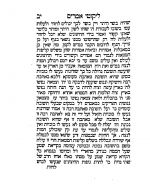 Page 3
-
 Page 4


Fundamental Concepts
Further Reading
- Rabbi Yosef Weinberg, Integrated commentary on Chapter 7, from the book Shiurim in Sefer HaTanya
- Rabbi Chaim Levi Yitzchak Ginsburg, Kelipas Nogah, an extensive commentary on Chapter 7 from the book Pninei HaTanya
Previous: Chapter 6 | Chapters of Likkutei Amarim | Next: Chapter 8
References
- ↑ Teshuvah out of so great a love is indeed effective. If the teshuvah is not out of such love but out of a lower love, then the teshuvah is effective only so that the person is forgiven.